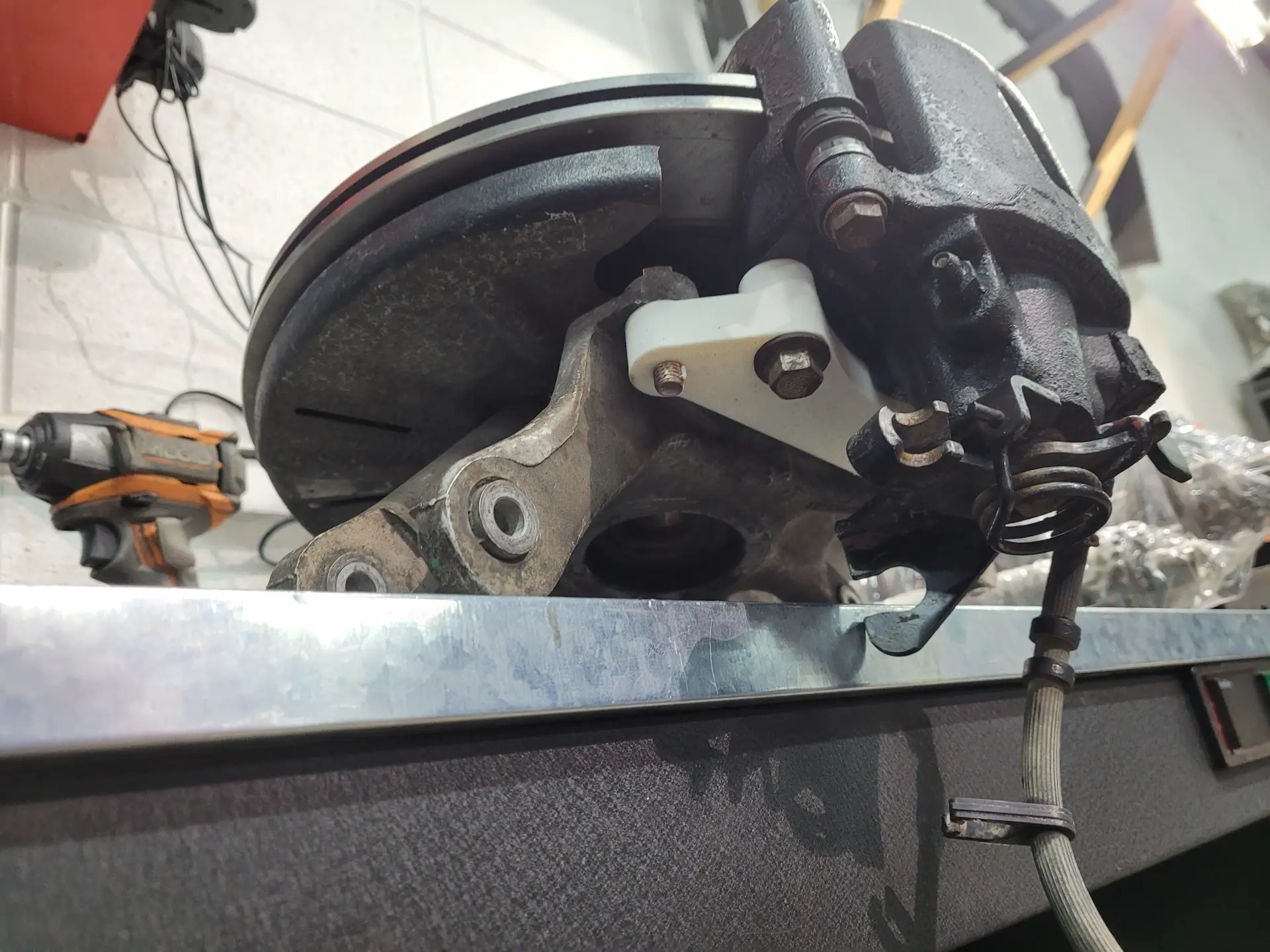
A clunk over bumps, a car that wanders or pulls, a bouncy or floaty ride, nose dive under braking and uneven tire wear all point to worn suspension. None of them should be guessed at. An inspection on the lift measures wear against specification and tells you the cause, the severity and whether it can safely wait.
The signs worth booking for
- Clunks or knocks over bumps, potholes or driveway ramps
- A car that wanders, pulls or feels vague on the highway
- Bouncing after a dip, or a floaty ride at speed
- The nose diving hard under braking
- Tires wearing on one edge, or wearing unevenly side to side
- Oil on the body of a shock absorber
Calgary winters and road conditions are hard on suspension components and bushings, so these tend to show up after a few seasons.
What a suspension inspection checks
A description and a road test narrow it down. The lift confirms it.
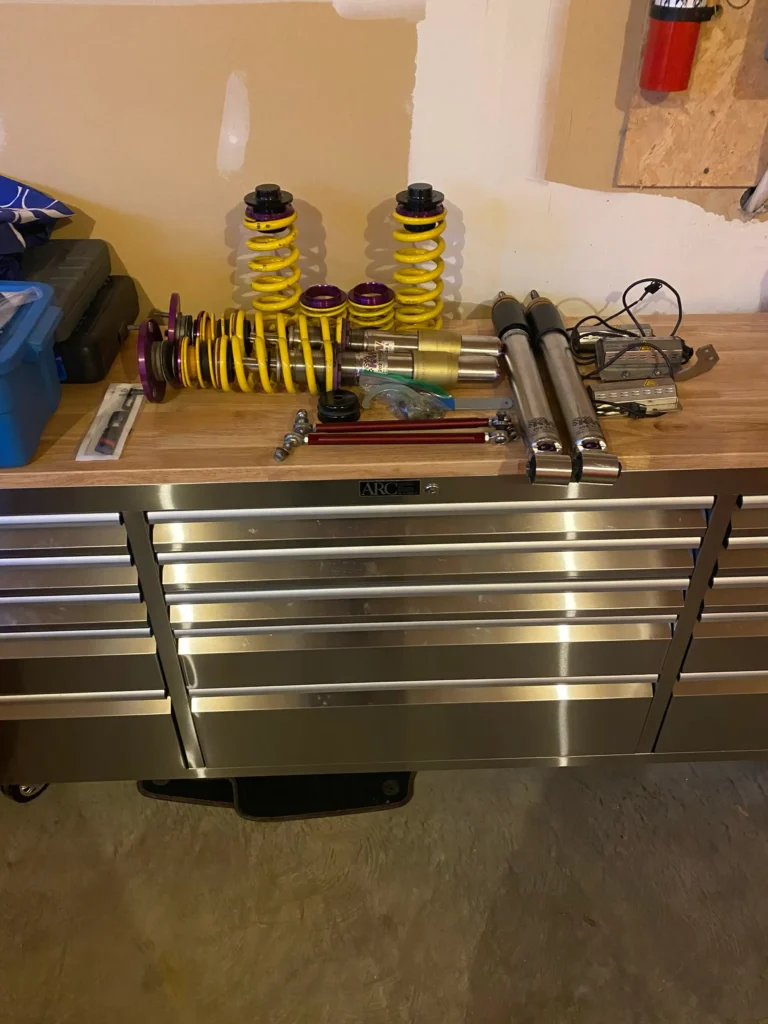
We measure wear against specification, check shocks and struts for leaks, and look at bushing and joint condition, with remaining life estimated.
You get the cause, the severity and whether it can safely wait, before anything is replaced.
Repair, refresh or upgrade
Sometimes one worn part is the whole story. On older cars, a refresh of bushings and joints together often gives back the car the factory intended.
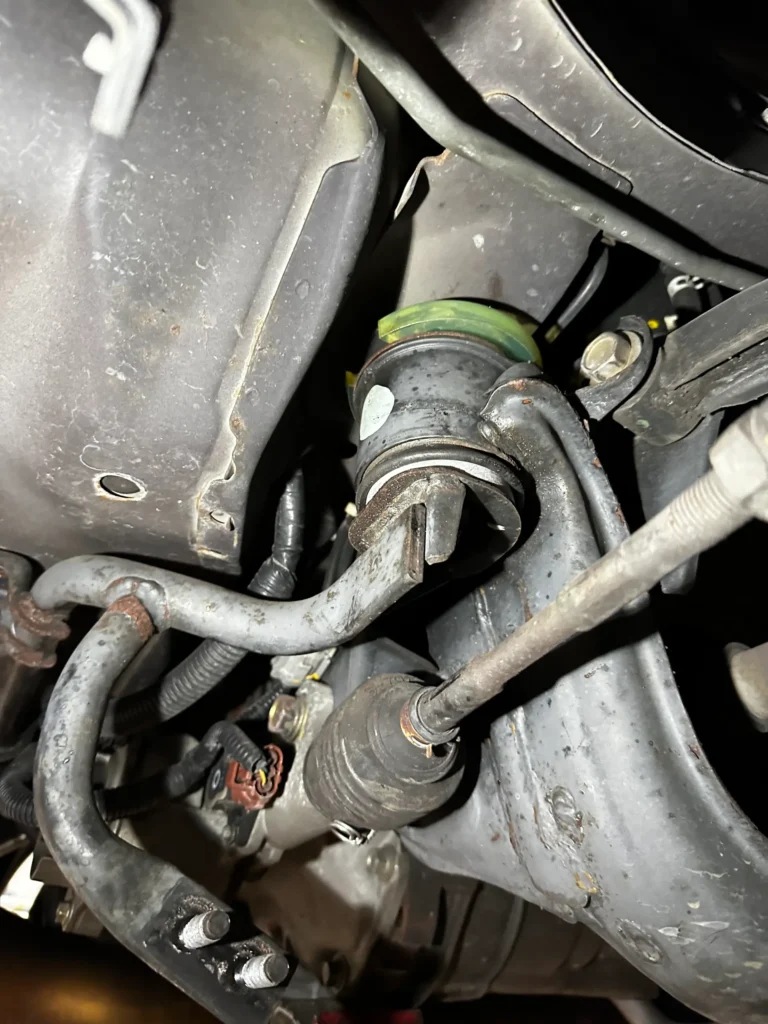
If you want more, coilovers, sway bars and bushings are chosen to work together and set up for how you drive, from daily comfort to track settings.
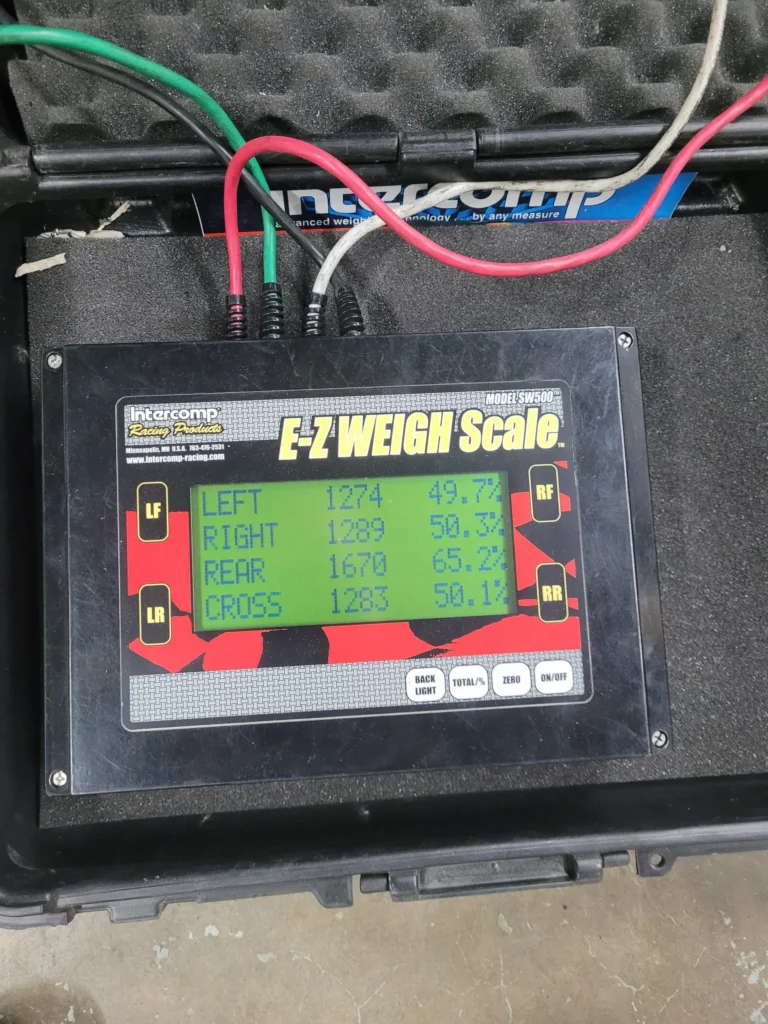
Either way, suspension work is followed by a wheel alignment, because new parts change the geometry.
What happens if you wait
Worn suspension rarely fails all at once. It costs you in other places first.
Faster wear
Worn parts let alignment drift, and tires pay for it.
Longer stops
Tired shocks let the car pitch and the tires lose grip under hard braking.
Knock-on wear
One loose joint loads the parts around it.
Lost confidence
The car stops feeling planted, which matters most on winter roads.
Questions drivers ask
My car clunks over bumps. Can you find it?
Yes. A description and a road test narrow it down, and inspection on the lift confirms it.
Do I need an alignment after suspension work?
Yes. Changing ride height or parts changes the geometry, so suspension work is followed by a wheel alignment.
Does every worn part need replacing right away?
No. You get the cause, the severity and whether it can safely wait, before anything is replaced.
Can a lowered or modified car still be my daily driver?
Yes, if it is built to be. We tune for drivability first and tell you plainly when a part crosses into track-only compromise territory.
Do you install parts I have bought elsewhere?
Case by case. We install customer-supplied parts we can stand behind, and decline the ones we cannot, with an explanation either way.