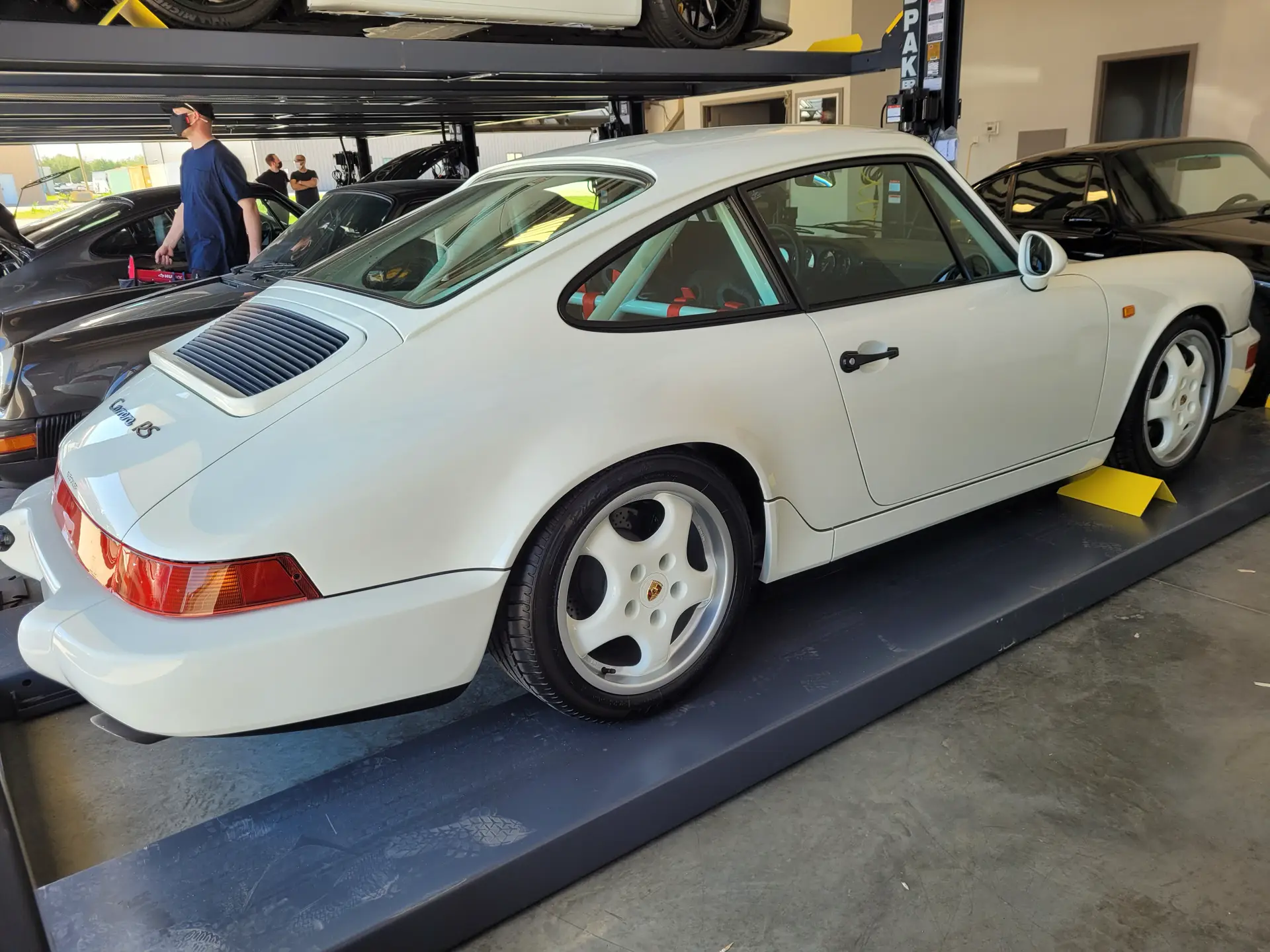
Alignment is the angle at which each wheel meets the road. Get it checked after new tires, after any suspension work, after a serious pothole strike, and any time the car pulls or the steering wheel sits off-centre. On a performance car the right settings depend on how you drive it, not only on the factory sheet.
What gets adjusted
Three angles do most of the work.
- Camber. How far the top of the wheel leans in or out. It decides how much tread touches the road in a corner.
- Toe. Whether the wheels point slightly in or out. It affects stability, turn-in and tire wear more than anything else.
- Caster. The tilt of the steering axis. It gives the steering its weight and self-centring.
Small numbers matter. A setting that is slightly out can wear the inside edge off an expensive tire long before the rest of it.
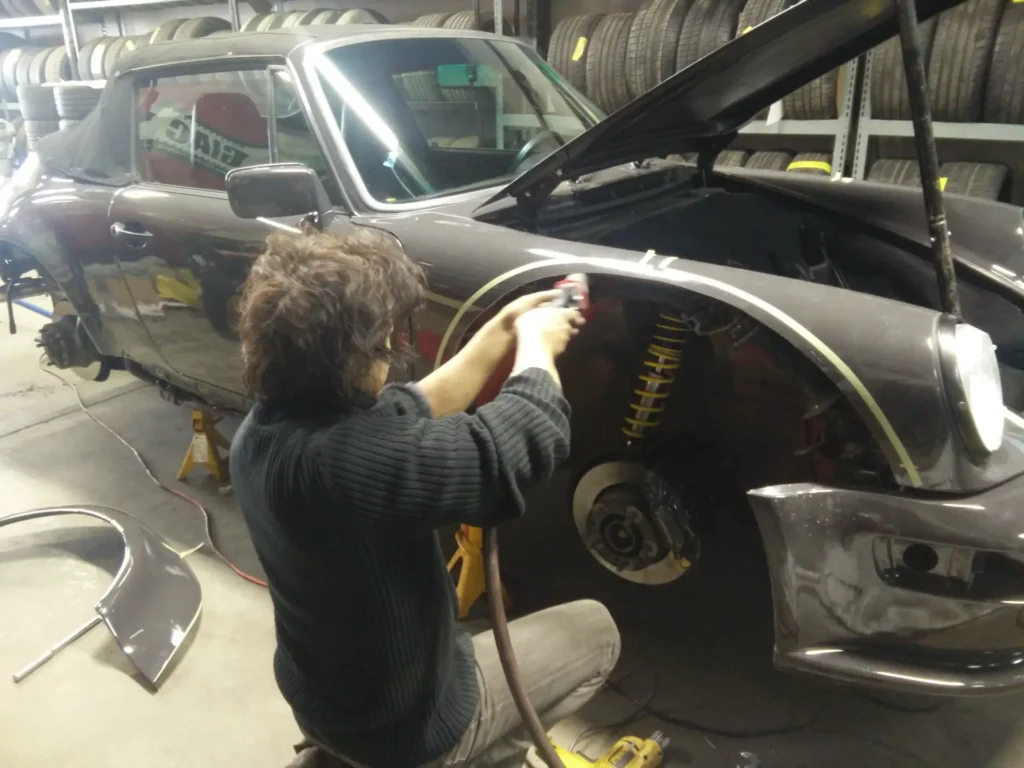
Signs you need one
Most alignment problems show up in the steering wheel or the tires.
- The car pulls to one side on a flat road
- The steering wheel sits off-centre when driving straight
- Tires wearing on one edge
- The car feels nervous or vague after hitting a pothole
Our alignment service in Calgary measures the car against specification and documents the readings.
Factory spec is a starting point
Factory settings are a compromise chosen for tire life and comfort. They are right for many cars and wrong for some.
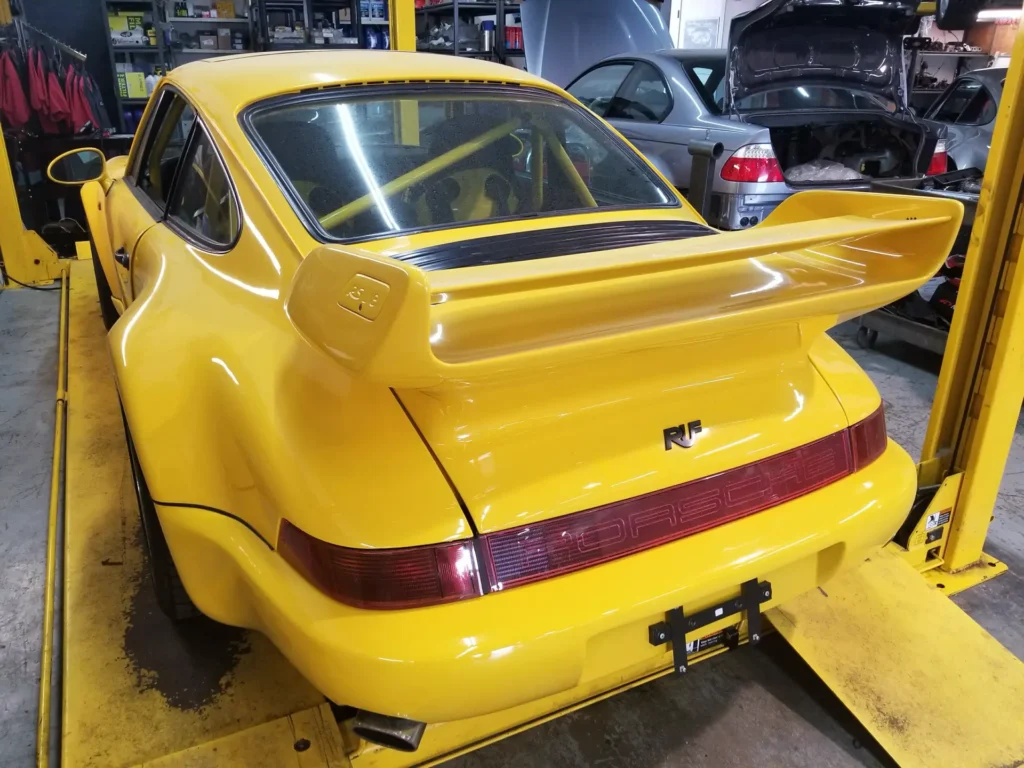
We set alignment to your use: factory spec for daily comfort, adjusted geometry for spirited or track driving, always with a printout of before and after.
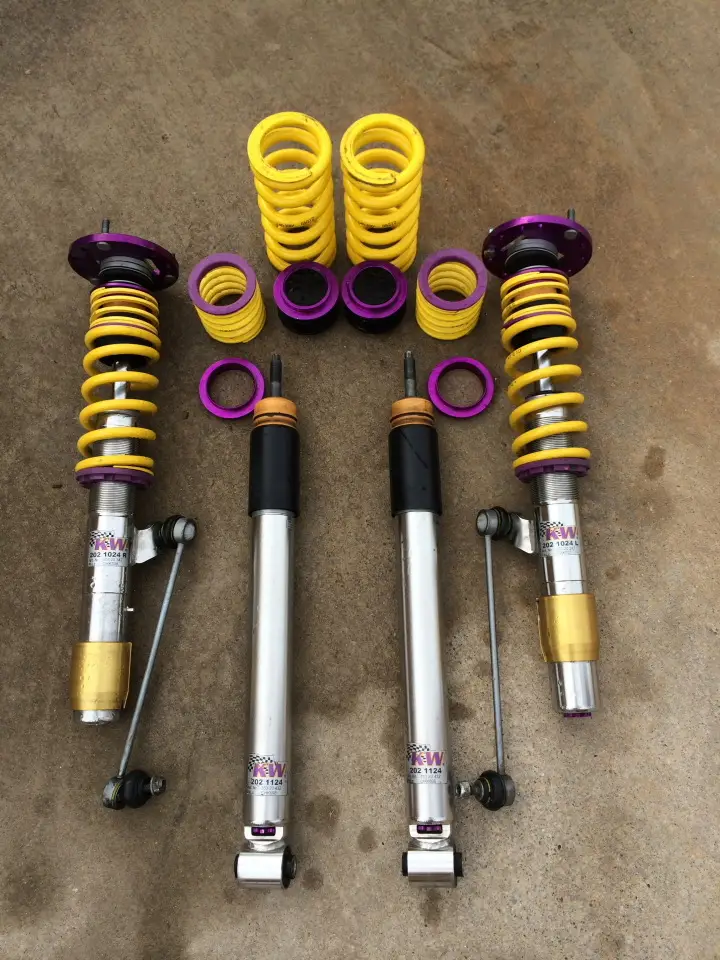
Lowered cars, coilovers and wider wheels all change the geometry. See performance upgrades in Calgary for how suspension fits into the bigger plan.
How an alignment visit works
Tell us the car and the goal
Grip, comfort, tire life or all three. How the car is used decides the settings.
Measure and set
Alignment measured against specification, with the readings documented.
Torque, test, hand over
Every fastener torqued to spec, a road test to confirm, and the before-and-after readings in your file.
Questions drivers ask
How often should I get an alignment?
After new tires, after any suspension work, after a serious pothole strike, and any time the car pulls or the wheel sits off-centre. On our roads, an annual check is worth it for expensive tires.
Do I need an alignment after coilovers or lowering?
Yes. Changing ride height changes the geometry. Any suspension work should be followed by an alignment.
Can you align a car for track days?
Yes. Settings are chosen for how the car is actually used: factory spec for daily comfort, adjusted geometry for spirited or track driving.
Will I see what was changed?
Yes. Alignment is measured against specification, always with a printout of before and after, and the readings go in your file.
Is alignment the same as balancing?
No. Balancing fixes vibration. Alignment fixes pulling, an off-centre steering wheel and uneven tire wear.